Fittings and Adapters

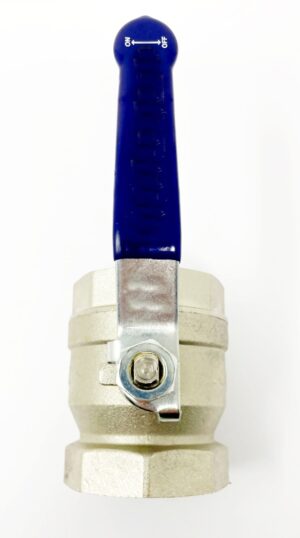
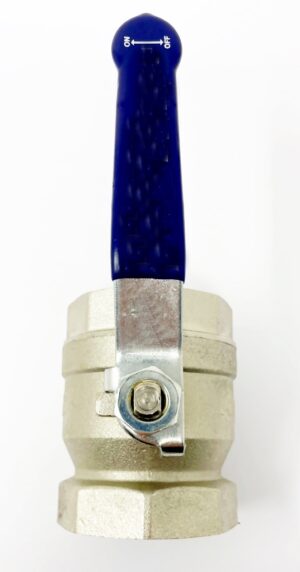
DN32 Ball Valve 1 ¼” BSP F/F
£20.00 Exc VAT SKU: HYADA-T-017Add to basketOur Repair or Replace PromiseThe M W Truck Parts Ltd PromiseAt M W Truck Parts Ltd, we stand behind the quality of every part we supply. If, within the applicable warranty period, a part develops a fault due to a manufacturing defect or pre-existing fault, we will inspect the item and, where the warranty applies, repair or replace it with an equivalent product.
Please note that all warranty claims are subject to inspection and assessment. Warranty processing, repair or replacement times may vary depending on the product, manufacturer and circumstances of the claim.
In some cases, the full warranty process can take up to 12 weeks to complete, although we will always aim to resolve claims as quickly as reasonably possible. Please note all delivery times are estimated and not guaranteed.

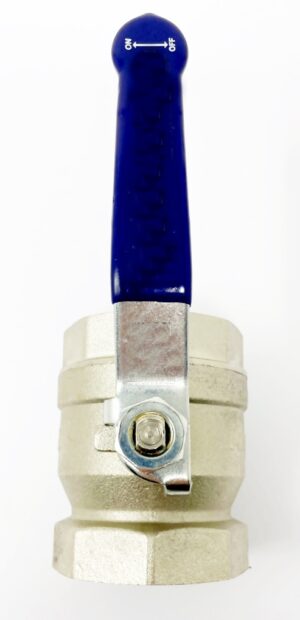
DN40 Ball Valve 1 ½” BSP F/F
£25.00 Exc VAT SKU: HYADA-T-018Add to basketOur Repair or Replace PromiseThe M W Truck Parts Ltd PromiseAt M W Truck Parts Ltd, we stand behind the quality of every part we supply. If, within the applicable warranty period, a part develops a fault due to a manufacturing defect or pre-existing fault, we will inspect the item and, where the warranty applies, repair or replace it with an equivalent product.
Please note that all warranty claims are subject to inspection and assessment. Warranty processing, repair or replacement times may vary depending on the product, manufacturer and circumstances of the claim.
In some cases, the full warranty process can take up to 12 weeks to complete, although we will always aim to resolve claims as quickly as reasonably possible. Please note all delivery times are estimated and not guaranteed.
DN50 Ball Valve 2″ BSP F/F
£35.00 Exc VAT SKU: HYADA-T-019Read moreOur Repair or Replace PromiseThe M W Truck Parts Ltd PromiseAt M W Truck Parts Ltd, we stand behind the quality of every part we supply. If, within the applicable warranty period, a part develops a fault due to a manufacturing defect or pre-existing fault, we will inspect the item and, where the warranty applies, repair or replace it with an equivalent product.
Please note that all warranty claims are subject to inspection and assessment. Warranty processing, repair or replacement times may vary depending on the product, manufacturer and circumstances of the claim.
In some cases, the full warranty process can take up to 12 weeks to complete, although we will always aim to resolve claims as quickly as reasonably possible. Please note all delivery times are estimated and not guaranteed.
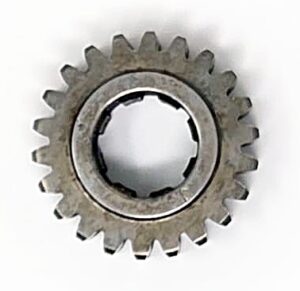
Intermediary Gear 8 Spline Pump Input Shaft to Suit Twin Gear PTO
£40.00 Exc VAT SKU: HYADA-T-024Add to basketOur Repair or Replace PromiseThe M W Truck Parts Ltd PromiseAt M W Truck Parts Ltd, we stand behind the quality of every part we supply. If, within the applicable warranty period, a part develops a fault due to a manufacturing defect or pre-existing fault, we will inspect the item and, where the warranty applies, repair or replace it with an equivalent product.
Please note that all warranty claims are subject to inspection and assessment. Warranty processing, repair or replacement times may vary depending on the product, manufacturer and circumstances of the claim.
In some cases, the full warranty process can take up to 12 weeks to complete, although we will always aim to resolve claims as quickly as reasonably possible. Please note all delivery times are estimated and not guaranteed.
PTO Adapter 4 Bolt ISO to 80mm DIN Flange
£100.00 Exc VAT SKU: HYADA-T-021Add to basketOur Repair or Replace PromiseThe M W Truck Parts Ltd PromiseAt M W Truck Parts Ltd, we stand behind the quality of every part we supply. If, within the applicable warranty period, a part develops a fault due to a manufacturing defect or pre-existing fault, we will inspect the item and, where the warranty applies, repair or replace it with an equivalent product.
Please note that all warranty claims are subject to inspection and assessment. Warranty processing, repair or replacement times may vary depending on the product, manufacturer and circumstances of the claim.
In some cases, the full warranty process can take up to 12 weeks to complete, although we will always aim to resolve claims as quickly as reasonably possible. Please note all delivery times are estimated and not guaranteed.
PTO Pump Adapter 2 Bolt SAE B 6T to 4 Bolt ISO
£90.00 Exc VAT SKU: HYADA-T-003Read moreOur Repair or Replace PromiseThe M W Truck Parts Ltd PromiseAt M W Truck Parts Ltd, we stand behind the quality of every part we supply. If, within the applicable warranty period, a part develops a fault due to a manufacturing defect or pre-existing fault, we will inspect the item and, where the warranty applies, repair or replace it with an equivalent product.
Please note that all warranty claims are subject to inspection and assessment. Warranty processing, repair or replacement times may vary depending on the product, manufacturer and circumstances of the claim.
In some cases, the full warranty process can take up to 12 weeks to complete, although we will always aim to resolve claims as quickly as reasonably possible. Please note all delivery times are estimated and not guaranteed.
PTO Pump Adapter 3 Bolt Uni to 4 Bolt ISO
£90.00 Exc VAT SKU: HYADA-T-002Add to basketOur Repair or Replace PromiseThe M W Truck Parts Ltd PromiseAt M W Truck Parts Ltd, we stand behind the quality of every part we supply. If, within the applicable warranty period, a part develops a fault due to a manufacturing defect or pre-existing fault, we will inspect the item and, where the warranty applies, repair or replace it with an equivalent product.
Please note that all warranty claims are subject to inspection and assessment. Warranty processing, repair or replacement times may vary depending on the product, manufacturer and circumstances of the claim.
In some cases, the full warranty process can take up to 12 weeks to complete, although we will always aim to resolve claims as quickly as reasonably possible. Please note all delivery times are estimated and not guaranteed.
PTO Pump Adapter 4 Bolt ISO to 3 Bolt Uni
£110.00 Exc VAT SKU: HYADA-T-001Add to basketOur Repair or Replace PromiseThe M W Truck Parts Ltd PromiseAt M W Truck Parts Ltd, we stand behind the quality of every part we supply. If, within the applicable warranty period, a part develops a fault due to a manufacturing defect or pre-existing fault, we will inspect the item and, where the warranty applies, repair or replace it with an equivalent product.
Please note that all warranty claims are subject to inspection and assessment. Warranty processing, repair or replacement times may vary depending on the product, manufacturer and circumstances of the claim.
In some cases, the full warranty process can take up to 12 weeks to complete, although we will always aim to resolve claims as quickly as reasonably possible. Please note all delivery times are estimated and not guaranteed.
PTO Pump Extension Adapter 4 Bolt ISO 95mm
£100.00 Exc VAT SKU: HYADA-T-004Add to basketOur Repair or Replace PromiseThe M W Truck Parts Ltd PromiseAt M W Truck Parts Ltd, we stand behind the quality of every part we supply. If, within the applicable warranty period, a part develops a fault due to a manufacturing defect or pre-existing fault, we will inspect the item and, where the warranty applies, repair or replace it with an equivalent product.
Please note that all warranty claims are subject to inspection and assessment. Warranty processing, repair or replacement times may vary depending on the product, manufacturer and circumstances of the claim.
In some cases, the full warranty process can take up to 12 weeks to complete, although we will always aim to resolve claims as quickly as reasonably possible. Please note all delivery times are estimated and not guaranteed.
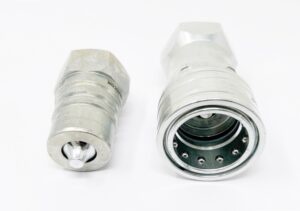
Quick Release Coupler Set for Hydraulic Hose 1 Inch BSP
£20.00 Exc VAT SKU: HYADA-T-007Read moreOur Repair or Replace PromiseThe M W Truck Parts Ltd PromiseAt M W Truck Parts Ltd, we stand behind the quality of every part we supply. If, within the applicable warranty period, a part develops a fault due to a manufacturing defect or pre-existing fault, we will inspect the item and, where the warranty applies, repair or replace it with an equivalent product.
Please note that all warranty claims are subject to inspection and assessment. Warranty processing, repair or replacement times may vary depending on the product, manufacturer and circumstances of the claim.
In some cases, the full warranty process can take up to 12 weeks to complete, although we will always aim to resolve claims as quickly as reasonably possible. Please note all delivery times are estimated and not guaranteed.
Quick Release Coupler Set for Hydraulic Hose 3-4 Inch BSP
£20.00 Exc VAT SKU: HYADA-T-008Add to basketOur Repair or Replace PromiseThe M W Truck Parts Ltd PromiseAt M W Truck Parts Ltd, we stand behind the quality of every part we supply. If, within the applicable warranty period, a part develops a fault due to a manufacturing defect or pre-existing fault, we will inspect the item and, where the warranty applies, repair or replace it with an equivalent product.
Please note that all warranty claims are subject to inspection and assessment. Warranty processing, repair or replacement times may vary depending on the product, manufacturer and circumstances of the claim.
In some cases, the full warranty process can take up to 12 weeks to complete, although we will always aim to resolve claims as quickly as reasonably possible. Please note all delivery times are estimated and not guaranteed.
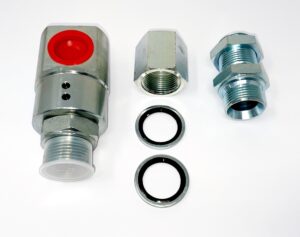
Rotary Swivel Coupling Set 1“ BSP 90 Degree 150L – 280 BAR
£80.00 Exc VAT SKU: HYADA-T-020Read moreOur Repair or Replace PromiseThe M W Truck Parts Ltd PromiseAt M W Truck Parts Ltd, we stand behind the quality of every part we supply. If, within the applicable warranty period, a part develops a fault due to a manufacturing defect or pre-existing fault, we will inspect the item and, where the warranty applies, repair or replace it with an equivalent product.
Please note that all warranty claims are subject to inspection and assessment. Warranty processing, repair or replacement times may vary depending on the product, manufacturer and circumstances of the claim.
In some cases, the full warranty process can take up to 12 weeks to complete, although we will always aim to resolve claims as quickly as reasonably possible. Please note all delivery times are estimated and not guaranteed.
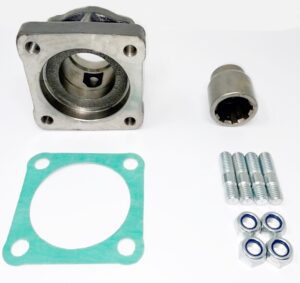
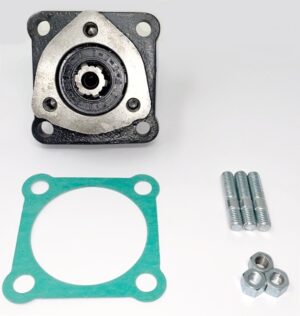
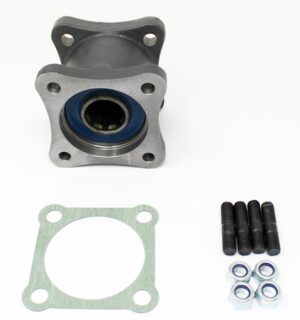
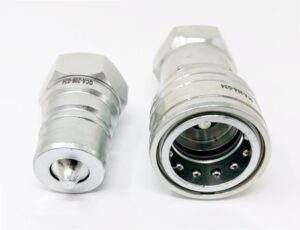
Find Out Answers Here
In truck hydraulic systems, adapters are mainly used to connect a hydraulic pump to a PTO when their drive formats or mounting patterns do not match. They are mechanical coupling components rather than hose or thread fittings. A common situation is when a PTO has a four- bolt output but the existing pump has a three-bolt mounting flange. In this case, a four-to-three bolt adapter allows the pump to be reused safely. Adapters are also used when converting between shaft-driven pumps and flange-mounted pumps. Their role is to ensure correct alignment, secure mounting, and smooth transfer of rotational drive from the PTO to the pump. When selected correctly, adapters prevent vibration, reduce wear, and help maintain long-term reliability of the hydraulic system.
You would need a hydraulic adapter whenever the PTO output does not directly match the pump input. This often happens when replacing a PTO and keeping an existing pump, or when upgrading a pump without changing the PTO. Differences can include bolt patterns, drive formats, or mounting depths. For example, if your old setup used a three-bolt pump and the replacement PTO only supports a four-bolt output, an adapter is required to make the connection work correctly. Adapters are commonly used during vehicle updates, gearbox changes, or hydraulic system repairs. Using the correct adapter avoids the need to replace otherwise serviceable components and ensures the pump remains properly aligned, securely mounted, and driven smoothly without placing unnecessary stress on the PTO or pump bearings.
No, hydraulic adapters are not limited to changing bolt patterns. While bolt-pattern conversion is very common, adapters are also used to convert different pump drive styles. Some hydraulic pumps are shaft-driven, using a splined or keyed shaft that engages with a coupling. Others are flange-mounted, where the drive is transferred through a circular flange secured with four or six bolts. In these cases, an adapter can be used to convert a standard PTO bolt output into a flange drive suitable for the pump. This type of adapter allows different pump designs to be used on the same PTO. By providing a correct mechanical interface, these adapters ensure accurate alignment, smooth rotation, and reliable power transfer across a wide range of hydraulic configurations.
Pump extensions are considered a type of adapter, but they serve a slightly different purpose. Instead of converting bolt patterns or drive styles, extensions are used to move the pump further away from the PTO. This is often required to clear chassis rails, exhaust components, or other drivetrain parts. The extension still transmits rotational drive from the PTO to the pump, so correct alignment and specification are essential. Like other adapters, extensions must match the PTO output and pump input precisely. Although their function is primarily spacing, they still perform an adapting role within the system. Using the correct extension helps maintain smooth operation, prevents vibration, and ensures the pump is positioned safely and practically within the vehicle’s available space.
Correct adapter selection is critical because the adapter directly transfers engine-driven rotational force from the PTO to the hydraulic pump. An incorrectly specified adapter can cause misalignment, vibration, noise, and accelerated wear of bearings, seals, and shafts. Over time, this can lead to pump failure or PTO damage, resulting in costly downtime. The correct adapter ensures the pump sits square to the PTO, is properly supported, and rotates smoothly under load. It also helps prevent stress being transferred into the gearbox or mounting points. Choosing the right adapter allows older pumps to work reliably with newer PTOs and avoids unnecessary component replacement. Proper specification protects the entire hydraulic system and contributes to consistent, long-term performance.